Bitcoin is much more than just a digital currency; it holds the key to modern cryptosystem. The pseudonym Satoshi Nakamoto, clinging to obscurity, unleashed the Internet currency into the world in 2009. Bitcoin is the money in itself, decentralized, devoid of any government control, or central banking influence. The whole scenario of the stimulation of other thousands of cryptocurrencies is the genesis of Bitcoin, and now finance, technology, and even trust in society have been thought of. To understand Bitcoin, one should look through its origin, blockchain working mechanisms, limited supply, and global implications.
The Birth of Bitcoin

Bitcoin came into existence following the 2008 financial crisis-a period which saw much instability in the traditional central banking systems. In this context, a pseudonymous person or persons under the name Satoshi Nakamoto published the Bitcoin whitepaper entitled "Bitcoin: A Peer-to-Peer Electronic Cash System". It offered a solution for electronic transactions without the reliance upon intermediaries, which included preventing double- spending and instilling a level of trust away from a centralized authority.
What distinguished the inception of Bitcoin was its ability to transact directly between users without intervention by banks, through a secure and transparent digital record. Trustless cryptography came into existence with Bitcoin, which seeks to replace human verification and recording of transactions with mathematical algorithms. This paved the way for decentralized finance in a broader spectrum.
Bitcoin in the Music Industry
The music industry is increasingly being influenced by Bitcoin and other cryptocurrencies as they empower artists to monetize work directly and engage fans more effectively. Blockchain enables digital ownership to be securely transferred through NFTs and tokenized royalties to ensure that payments remain transparent and automatic, without having to go through any intermediaries. Fans must be able to support artists through crowdfunding or through tokenized special experiences, while fractional ownership provides a brand-new investment avenue. Yet high volatility, fees, or a technical literacy barrier have discouraged increased adoption. That notwithstanding, there are several ways cryptocurrency can provide new empowerment opportunities for prime-time musicians to retire the rights to their intellectual property, attract fair royalties, and enhance engagement with the audience around the world.
How Bitcoin Works: Blockchain Mechanics
At the core of Bitcoin is blockchain technology, a decentralized ledger that keeps track of every transaction ever made. The blockchain comprises blocks threaded together sequentially, with each block containing transaction data, its hash, and the hash of the previous block, ensuring data integrity while prohibiting tampering.
Each block in the Bitcoin blockchain contains the following:
- Transaction Data – Details of transfers between users: sending, receiving, and specifying how much Bitcoin is transferred;
- Hash – A digital fingerprint uniquely identifying the block;
- Previous Hash – A reference to the previous block, thus maintaining an unbroken chain;
Whenever any transaction occurs in the Bitcoin network, it gets broadcast. Miners then compete to validate these transactions through proof-of-work. That involves solving difficult mathematical puzzles. As soon as a block is mined successfully, it is appended to the blockchain, and the miner who mined that block is rewarded with bitcoins. This implementation guarantees security, decentralization, and transparency without having to depend on some central authority.
The Supply Cap and Scarcity
Limitation of supply is one of Bitcoin's strongest features. The maximum Bitcoin supply is fixed at 21 million, a mechanism set in the protocol itself. This artificial scarcity stands analogous to that of gold, hence Bitcoin is metaphorically called digital gold.
Mining is the system by which new Bitcoins are brought around, with the reward being halved at approximately four-year intervals-traditionally known as the halving. This controlled issuance keeps inflation in check and preserves a predictable supply, which makes Bitcoin unlike its civilian cousin-the fiat currency that governments can print at will. Over time, mining will become more competitive, and fees will begin to replace block rewards as the principal means of reward for miners.
Bitcoin as a Store of Value
Additionally, Bitcoin is attractive as a store of-value because it is scarce and decentralized. Unlike traditional currencies that face inflation, Bitcoin has a fixed and predictable supply. Investors are often compared with gold in parallel so as to serve as a hedge against economic uncertainty and currency devaluation.
Furthermore, Bitcoin can be said to be globally accessible, such that it can be owned and transferred by anybody with an Internet connection. This feature has implications for citizens in countries where financial systems are unstable, as this provides an alternate method in which to preserve wealth. On the other side, over the last decade, it has become increasingly institutionalized, with investment funds, companies, and even governments recognizing it as a legitimate asset class.
Global Influence and Adoption
Bitcoin has infused changes in not just the financial but the wider global systems too. Its underlying blockchain technology has brought innovations across industries, including supply chain management, digital identity, and healthcare. Furthermore, Bitcoin has relieved some pressure on a discussion concerning financial sovereignty, disbursing capital control measures or absolute hyperinflation at some points in time.
Some countries have granted Bitcoin status as legal tender, while others have banned its operations at any level or have somewhat limited its use. This, however, does not prevent Bitcoin from making its presence felt on global financial policies, pushing central banks to investigate the possibilities of setting up digital currencies of their own. Decentralized and permissionless, it stands in complete opposition to the traditional banking model, giving rise to fierce debates concerning the very future of money.
Bitcoin Mining and Environmental Considerations
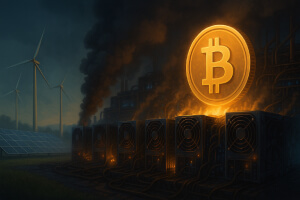
Bitcoin mining demands performing computations to an extremely high degree, the highest possible in fact. Miners in search of wealth spend tremendous amounts of electric power. While the proof-of-work system guarantees that the network is secure and safe, it has nevertheless, been subject to severe criticism for its environmental impact. As a result, some miners have begun to utilize clean power resources for their energy needs, while alternate forms of consensus mechanisms such as proof-of-stake are currently being analyzed and experimented with by other cryptocurrencies.
Analysis of Bitcoin's energy consumption is considered essential for its sustainability assessment. Supporters of this emerging industry of energy-intensive mining would say that it promotes renewable energy development and grid balance, while defenders of the environment generally oppose the industry for its carbon emissions. As the network evolves, balancing security versus environmental responsibility remains the main challenge.
Security and Decentralization
Bitcoin is secure because of its decentralized network. There is no single entity that governs the blockchain. Individual transactions are seen and verified by all participants within the network. Cryptography protects the users' funds, and private keys give access to owners themselves only.
While the network itself is highly robust, end users must practice due diligence. Secure wallets, proper management of private keys, and protected from phishing attacks all go towards preserving assets. Even though this is a decentralized system, human error and/or neglect in applying good security measures can inevitably lead to great losses, underscoring the importance of the educational aspect, alongside technical innovation.
Bitcoin and Financial Freedom
Possibly, one of the best-recognized properties of Bitcoin is that it affords its users financial freedom. Money, in essence, moves unobstructed, thus users send or receive funds worldwide, avoiding banks, intermediaries, or governments to approve the transaction process. This interface is of much value in a country where there is inhibited banking infrastructure or a thin layer of access to traditional financial services.
Bitcoin serves as the peer-to-peer payment mechanisms for micropayments, remittances with minimal fees. Removing the traditional financial middlemen offers the user more speed, less cost, and greater privacy with their transactions. These salient features have catalyzed the growth of decentralized finance (DeFi) and have also reshaped the discourse around financial inclusion across the world.
Challenges and Risks
The pros of Bitcoin cannot be discounted. It is also fraught with risk. On the one hand, price volatility is a major concern, with Bitcoin having undergone the fast shifts in prices. On the other hand, regulatory uncertainty is also a challenge, for governments across the world remain engrossed in debating the manner of taxations and legal statuses and compliance frameworks.
Also, Bitcoin is a target for cybercrimes, including hacking and fraudulent activities. Hence, the users must be vigilant regarding secure wallets, strong authentication measures, and secure trading practices. According to many supporters, Bitcoin has more long-term potential than short-term risks, particularly as infrastructure, education, and regulatory clarity advance.
Bitcoin’s Role in Payments and Everyday Transactions
Considered mainly a store of value or investment asset, Bitcoin is equally employed for real-life payments. Storefronts and online platforms accept Bitcoin for goods and services-to-the gamut of retailing, all the way to booking travel. Payment processors and applications that present Bitcoin conversion on the fly to local currencies provide some practicality here, joining the dots between cryptocurrency and daily life.
Instability and transaction fees pose the major roadblocks in adoption; however, being borderless, Bitcoin can offer almost instant international payments. Mt. Gox PM: This gives a lot of international freelance work, a lot of big businesses, and people in countries where there are very few banking-based infrastructures a real alternative for transactions that are fast, cheap, and transparent.
Bitcoin Regulation and Legal Considerations

Regulation and control of Bitcoin implementation have come under the limelight in recent years, spurred by increased adoption rates by individuals and investors. Most regulations concern taxation and legalities related to anti-money-laundering (AML) and know-your-customer (KYC). Therefore, one must understand the legal terrain well to enable investors, business, and users to cover their bases and avoid pertinent pitfalls.
Regulation varies radically by regions: some countries fully embrace Bitcoin, others impose restrictions on it, and fewer have banned it outright. While the regulatory frameworks may enforce some kind of legitimacy or consumer protection, at the same time, the same frameworks might impose roadblocks for Bitcoin and its decentralized nature. How to oversee without stifling innovation remains to be the central problem facing regulators and the crypto community.
The Future of Bitcoin
Being also an adjunct of the core values of decentralization, scarcity, and transparency, due to increased acceptance, Bitcoin is edging ever closer to traditional financial infrastructure. Hence it is beyond currency as it is spearheading a massive movement dedicated toward expounding an open, safe, and inclusive financial ecosystem.
Quick Links
Why do you think cryptocurrencies are declining? If so, which coins will lead to a rise? pic.twitter.com/hDK1paC7KT
— Pix Animal (@PixAnimalNFT) November 2, 2025
With the kind help from

#CryptoCorner | A growing number of U.S. banks are embracing cryptocurrencies JPMorgan to allow institutional clients to use crypto as loan collateral Goldman, BNY partner to launch tokensied money Morgan Stanley's retail clients can trade Bitcoin, Ethereun, Solana by Q2 2026… pic.twitter.com/jyslWKOKSz
— CNBC-TV18 (@CNBCTV18News) October 27, 2025